Summer in the Lower Rio Grande Valley is hot by almost any standard. Typical highs run in the mid-to-upper 90s °F, and with the Valley's humidity the heat index frequently climbs above 100 to 110 °F. For Scouts spending a week outdoors at a camp like Camp Perry on the Arroyo Colorado, heat safety at summer camp is not an extra; it is the foundation that makes every other activity possible. This guide covers the heat index, acclimatization, hydration, scheduling, and how to recognize and respond to heat illness.
Key takeaways
- The heat index combines air temperature and humidity to estimate how hot it feels; in full sun it can feel even hotter than the published value.
- Bodies need time to adjust to heat. Build activity up gradually over the days before and during camp.
- Drink water steadily throughout the day rather than waiting for thirst, and replace electrolytes during long, sweaty activity.
- Schedule strenuous activity for mornings and evenings and build in regular shade and rest breaks.
- Heat stroke is a medical emergency: call 911 immediately and begin cooling the person while you wait.
Medical disclaimer
This article is general educational information from an independent community website. It is not medical advice and does not replace training, a physician's guidance, or the policies of Scouting America and the Rio Grande Council. If you think someone has heat stroke, or anyone is confused, unresponsive or getting worse, call 911 immediately.
Understanding the heat index
The heat index, sometimes called the "apparent temperature," is the National Weather Service's measure of how hot it really feels when relative humidity is combined with the actual air temperature. It matters because the body cools itself mainly by evaporating sweat. When the air is already full of moisture, sweat evaporates slowly, and the body loses one of its most important cooling tools.
That is why a humid 95 °F Valley afternoon can be more dangerous than a drier, hotter day. The National Weather Service groups heat index values into four risk categories:
| Heat index | NWS category | Possible effects with prolonged exposure or activity |
|---|---|---|
| 80–90 °F | Caution | Fatigue is possible |
| 90–103 °F | Extreme caution | Heat cramps and heat exhaustion are possible |
| 103–124 °F | Danger | Heat cramps and heat exhaustion are likely; heat stroke is possible |
| 125 °F and above | Extreme danger | Heat stroke is highly likely |
Two details matter. First, heat index values are calculated for shady conditions with a light wind. Working or playing in full sunshine can raise the effective heat index by as much as 15 °F. Second, the categories describe risk for people with prolonged exposure or strenuous activity, which describes a typical day at Scout camp. You can read the NWS's full explanation on its heat safety pages, and check local forecasts and heat advisories from the NWS Brownsville/Rio Grande Valley office.
Try the heat index calculator
Enter the temperature and relative humidity from your local forecast to see the approximate heat index and its risk category. Remember to add a margin for full sun.
Acclimatization: giving bodies time to adjust
Acclimatization is the process by which the body gradually adapts to working in heat. Over roughly one to two weeks of regular, increasing heat exposure, people typically begin sweating earlier and more efficiently, and their heart rate and body temperature rise less during exercise. Guidance from the CDC's National Institute for Occupational Safety and Health (NIOSH) emphasizes that people who are new to hot conditions face the highest risk of heat illness in their first days.
Even Scouts who live in the Valley may not be acclimatized; many spend much of the summer in air conditioning. Practical steps include:
- In the weeks before camp, encourage Scouts to spend more time outdoors each day, gradually adding longer and more active sessions, ideally at the same time of day they will be active at camp.
- On the first days of camp, leaders can plan lighter afternoons, extra breaks and closer observation, especially for first-year campers.
- After illness, Scouts recovering from a fever, stomach bug or poor sleep lose some of their heat tolerance and need extra attention.
Hydration: drink early and often
Hydration is the most controllable part of heat safety. Thirst is a late signal; by the time a Scout feels thirsty, they may already be behind on fluids. Build the habit of drinking small amounts regularly.
- Carry water everywhere. Each Scout should have at least one full, labeled bottle at every program area, and two is better. See our summer camp packing list for bottle suggestions.
- Drink on a schedule. For people working in heat, CDC/NIOSH guidance recommends about one cup (8 ounces) of water every 15 to 20 minutes during activity, and cautions against drinking more than about 48 ounces (1.5 quarts) per hour. Children's needs vary with size and activity, so use this as a general reference, not a prescription.
- Use refill checkpoints. Leaders can announce "bottle checks" at every program change or meal: bottles out, show they are being emptied, and refill.
- Watch urine color. Pale yellow generally suggests good hydration; dark yellow suggests a Scout needs to drink more. Teaching Scouts to self-check makes hydration their own responsibility.
Electrolytes
Sweat carries away salt and other electrolytes. Regular meals replace much of that loss; during long, heavy sweating, an electrolyte drink can help.
- Offer electrolyte drinks as a supplement to water, not a replacement for it.
- Encourage Scouts to eat full meals, including salty foods, rather than skipping meals because of the heat.
- Avoid energy drinks and large amounts of caffeine or sugary soda, which do not help with hydration in the heat.
- Drinking very large amounts of plain water without eating can, in rare cases, lower blood sodium levels. Steady, moderate drinking plus regular meals is the goal.
Clothing and sun protection
The right clothing helps sweat evaporate and blocks the sun's radiant heat.
- Light-colored, loose, lightweight clothing reflects sunlight and lets air move across the skin.
- Moisture-wicking fabrics dry faster than cotton in humid air.
- Wide-brimmed hats shade the face, ears and neck.
- Sunscreen (SPF 30 or higher) prevents sunburn, which reduces the skin's ability to cool itself. Reapply after swimming and heavy sweating.
- Uniform timing. Leaders can consider switching to activity shirts for hot afternoon programs and saving the field uniform for cooler evening ceremonies, within camp and unit expectations.
- Wet bandanas or cooling towels around the neck provide evaporative cooling when the air allows it.
Scheduling activities, shade and rest cycles
Much of heat safety happens on the schedule, long before anyone feels ill.
Use the cooler hours
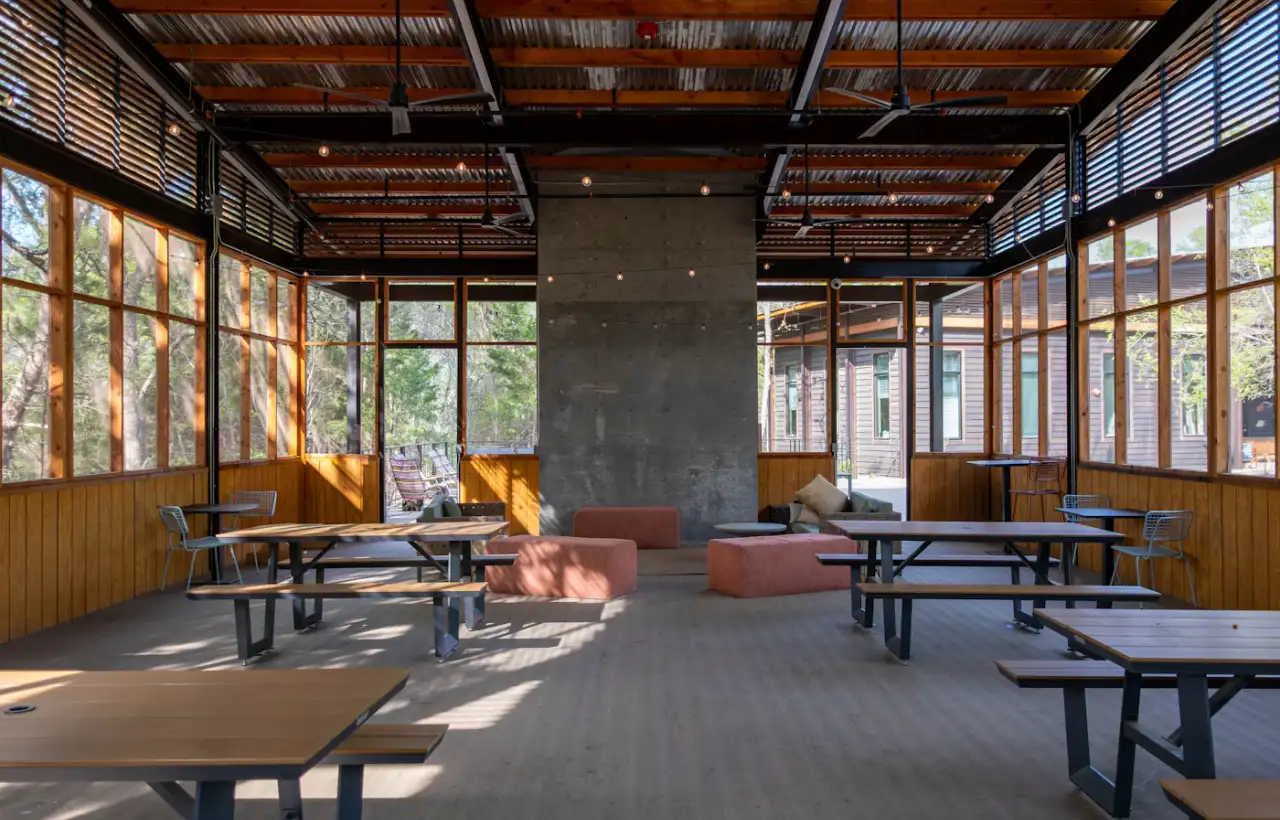
Early morning and evening are the best times for strenuous activity such as hikes, service projects and physically demanding games. Mid-afternoon, often the hottest part of the day, is a natural time for shaded or indoor activities, aquatics, or rest. Camp Perry's air-conditioned dining hall, pavilions and STEM building are examples of the kinds of cooler spaces that help break up the day.
Build in work-rest cycles
When the heat index is high, alternate activity with regular breaks in the shade. The higher the heat index and the harder the activity, the longer and more frequent the breaks should be. A shaded pavilion with water available is ideal.
Know when to modify or cancel
Leaders should be willing to shorten, move or cancel outdoor activities when the forecast heat index enters the Danger range or when the NWS issues a heat advisory or excessive heat warning. Follow camp staff direction; camp programs may already adjust their schedules on the hottest days.
Recognizing heat cramps, heat exhaustion and heat stroke
Heat illness is often described as a spectrum, from mild to life-threatening, but it does not always progress in order. Scouts may not recognize their own symptoms, so adults and buddies need to watch closely. The table below summarizes CDC guidance on common warning signs and first steps.
| Condition | Common signs | What to do |
|---|---|---|
| Heat cramps | Heavy sweating during intense activity; muscle pain or spasms, often in the legs, arms or abdomen | Stop the activity and move to a cool place. Drink water or a sports drink. Wait for cramps to go away before resuming activity. Get medical help if cramps last longer than an hour or the person has heart problems or is on a low-sodium diet. |
| Heat exhaustion | Heavy sweating; cold, pale, clammy skin; fast, weak pulse; nausea or vomiting; muscle cramps; tiredness or weakness; dizziness; headache; fainting | Move to a cool place and loosen clothing. Apply cool, wet cloths or have the person sit in a cool bath. Sip water. Get medical help right away if the person is vomiting, symptoms get worse, or symptoms last longer than an hour. |
| Heat stroke | High body temperature (103 °F or higher); hot, red, dry or damp skin; fast, strong pulse; headache; dizziness; nausea; confusion; losing consciousness | Call 911 right away. Heat stroke is a medical emergency. Move the person to a cooler place and lower their temperature with cool cloths or a cool bath. Do not give the person anything to drink. |
For the complete, current guidance, see the CDC's extreme heat resources.
Confusion is a red flag
Any change in behavior in a hot, active Scout, such as confusion, slurred speech, unusual irritability, stumbling or not making sense, should be treated as possible heat stroke. Call 911, alert camp health staff, and start cooling immediately. Do not wait to see whether it gets better.
Other heat-related problems
- Sunburn is painful and reduces the skin's ability to cool the body. Get out of the sun and use cool compresses.
- Heat rash appears as clusters of small red bumps in areas where sweat gets trapped. Keep the area dry and move to a cooler spot.
Buddy checks
Scouting's buddy system is one of the best heat-safety tools available. Buddies spend the day together and are often the first to notice a change. Teach Scouts a simple routine they can run at every program change:
Water check
Is your buddy's bottle getting emptier? When did they last refill?
Look check
Is your buddy unusually red, pale, sweaty or not sweating at all? Are they dragging or unsteady?
Talk check
Ask how they feel. Headache, dizziness, nausea or cramps are signs to rest, drink and tell an adult.
Tell an adult
If anything seems off, or if a buddy seems confused, tell a leader or staff member immediately. It is never wrong to ask for help.
Medications and health conditions
Some medications and health conditions affect how the body handles heat. Examples commonly mentioned by health authorities include certain antihistamines, some medications for ADHD, some antidepressants and diuretics, among others. Conditions such as obesity, heart conditions, and recent illness with fever, vomiting or diarrhea can also raise risk.
- Parents should talk with their child's physician about heat and activity before camp, especially if the Scout takes daily medications.
- Note relevant medications and conditions accurately on the Scouting America Annual Health and Medical Record.
- Never stop or change a prescribed medication for camp without a physician's guidance.
- Leaders should review health forms before camp so they know which Scouts may need extra attention in the heat.
Leader responsibilities
Adult leaders set the tone for heat safety. Scouting America's Guide to Safe Scouting and camp policies establish the overall framework; at the unit level, leaders can put these practices into action:
- Check the forecast daily using the NWS, and note heat advisories and warnings.
- Model the behavior. Adults who carry water, wear hats, reapply sunscreen and take breaks make it normal for Scouts to do the same.
- Plan campsite activities for cooler hours and keep afternoons in the campsite low-key.
- Run hydration checks at meals, flag ceremonies and program changes.
- Know where help is: the camp health lodge, the emergency vehicle route, and how to reach camp staff from your campsite.
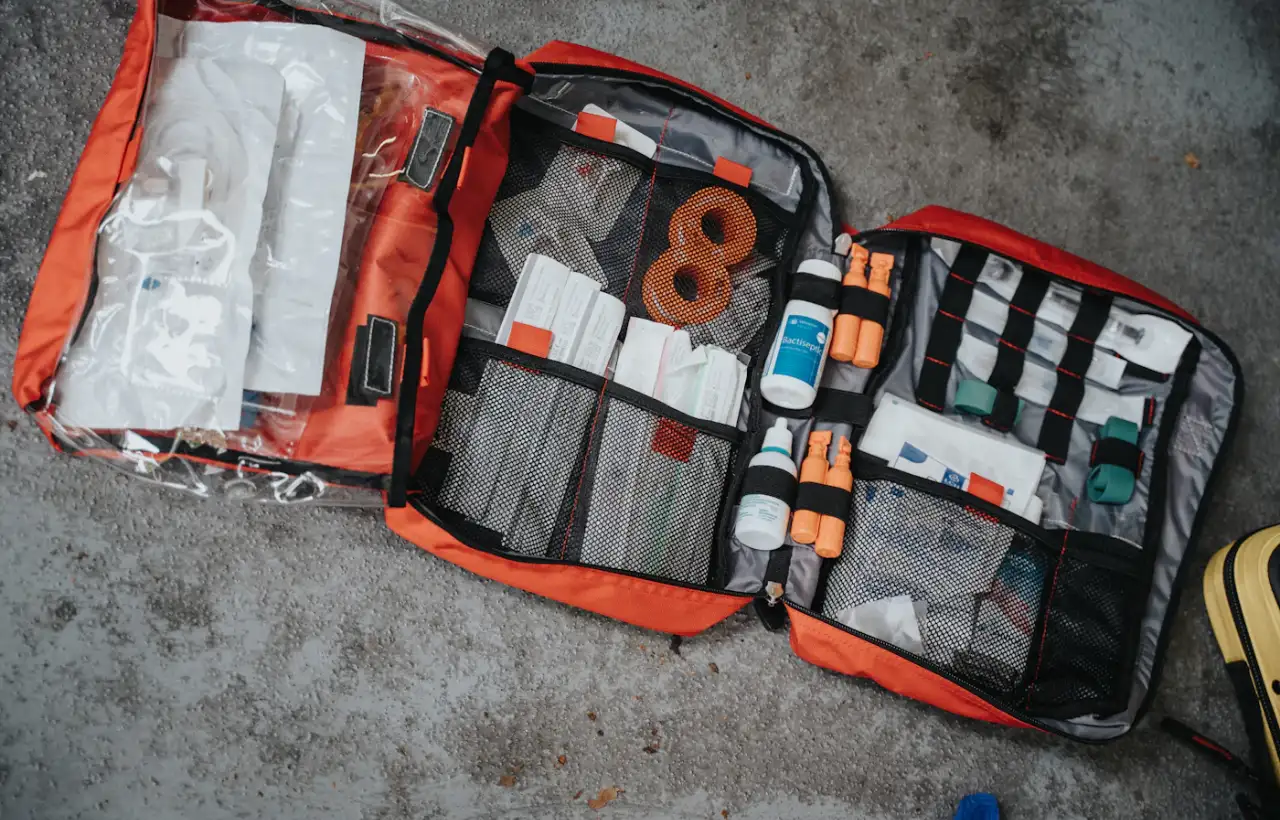
- Get trained. First aid and CPR training help leaders recognize and respond to emergencies. Many Scouting America trainings include hazardous weather content.
Aquatics are not a heat cure-all
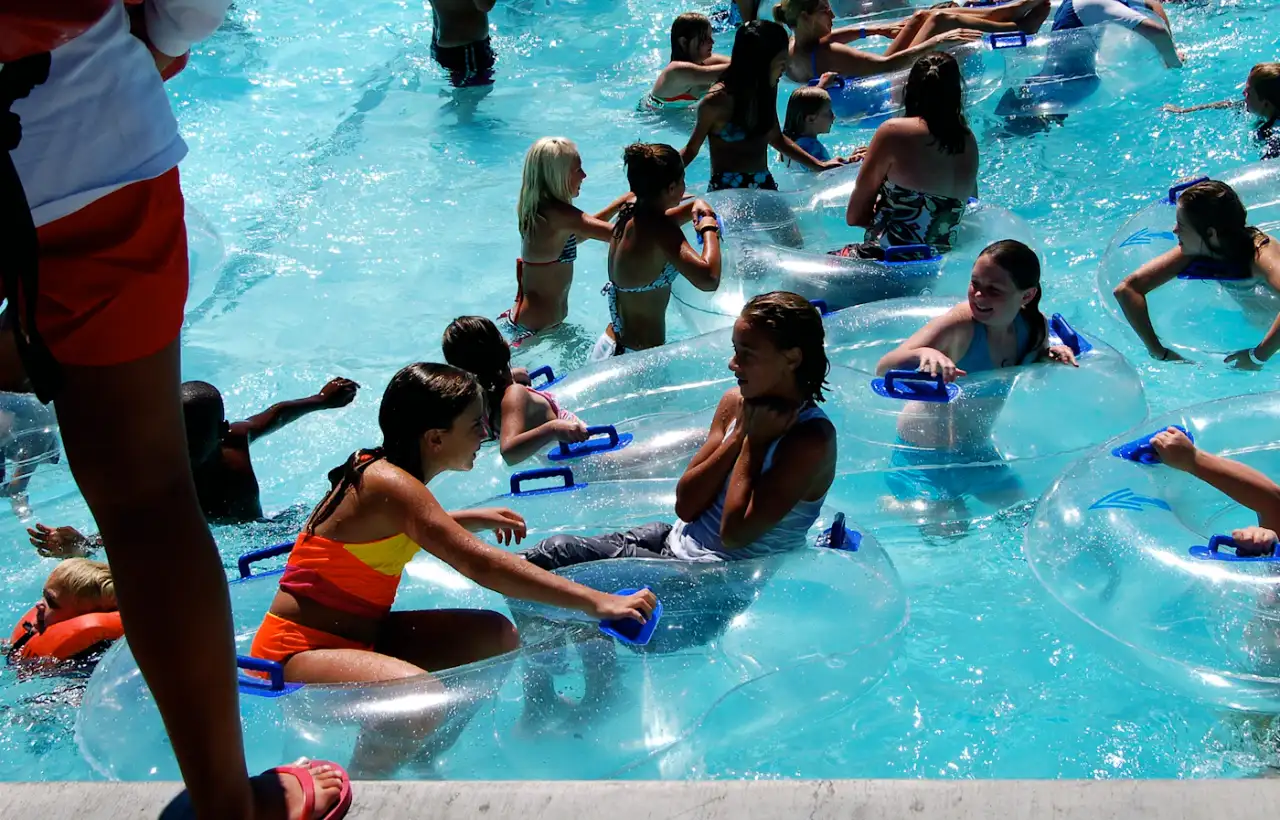
Swimming feels cooling, but Scouts still sweat and lose fluids in hot weather, and pool decks and docks can be sunny and hot. Keep water bottles at the waterfront too. For water safety basics, read our guide to Safe Swim Defense.
Sources and further reading
- National Weather Service: Heat Safety
- National Weather Service Brownsville/Rio Grande Valley forecast office
- CDC: Extreme Heat
- Scouting America: Guide to Safe Scouting
- Rio Grande Council: Camp Perry (official camp information)
On this site, see also our plan your visit page for weather tips, the summer camp program overview, our first-time camper parent guide, and the camp FAQ.
Frequently asked questions
What heat index is too hot for Scout activities?
There is no single cutoff, but the NWS considers a heat index of 103 °F and above to be in the Danger category, where heat exhaustion is likely with prolonged activity. At those levels, strenuous outdoor activity should be moved, shortened or cancelled, and camp staff direction should always be followed.
How much water should a Scout drink at camp?
Needs vary with age, size and activity. As a general reference, CDC/NIOSH guidance for people working in heat is about one cup every 15 to 20 minutes during activity, without exceeding about 48 ounces per hour. Drinking steadily all day and eating regular meals is the practical goal.
What is the difference between heat exhaustion and heat stroke?
Heat exhaustion typically involves heavy sweating, cold and clammy skin, weakness, nausea and dizziness. Heat stroke involves a very high body temperature, hot skin, a fast strong pulse and changes in mental status such as confusion or loss of consciousness. Heat stroke is a medical emergency that requires calling 911.
Should you give water to someone with heat stroke?
No. CDC guidance says not to give a person with suspected heat stroke anything to drink. Call 911, move them somewhere cooler and cool them with cool cloths or a cool bath while waiting for help.
Where can I find heat advisories for Camp Perry?
Camp Perry is in Cameron County, which is covered by the National Weather Service office in Brownsville. Check its forecasts and heat advisories before and during camp.
Conclusion
Heat is part of summer camp in the Rio Grande Valley, but heat illness does not have to be. Understanding the heat index, acclimatizing, drinking steadily, dressing for the sun, scheduling hard work for cooler hours and watching each other closely will prevent most problems. When something does go wrong, fast recognition matters most, and any sign of heat stroke means calling 911 and cooling the person right away.

Volunteer writers and Camp Perry alumni. We base our guides on published council materials and reputable public sources — always confirm current camp rules with your unit and the Rio Grande Council. Suggest a correction.